Blog
Web extraction, LLMs, and building in public.
Technical deep dives on web extraction, content parsing for LLMs, anti-bot bypass, and building open-source infrastructure in Rust. Written by the team behind webclaw.
webclaw turns any website into clean, structured content for AI applications. These posts cover the engineering decisions, trade-offs, and lessons learned building a web extraction toolkit from scratch.
92 postsPage 3 / 11
Aug 3, 2026Massi
11 Apify Alternatives by Workflow: Sources and Tradeoffs
Compare 11 Apify alternatives using official product sources, deployment scope and workload-specific tradeoffs.
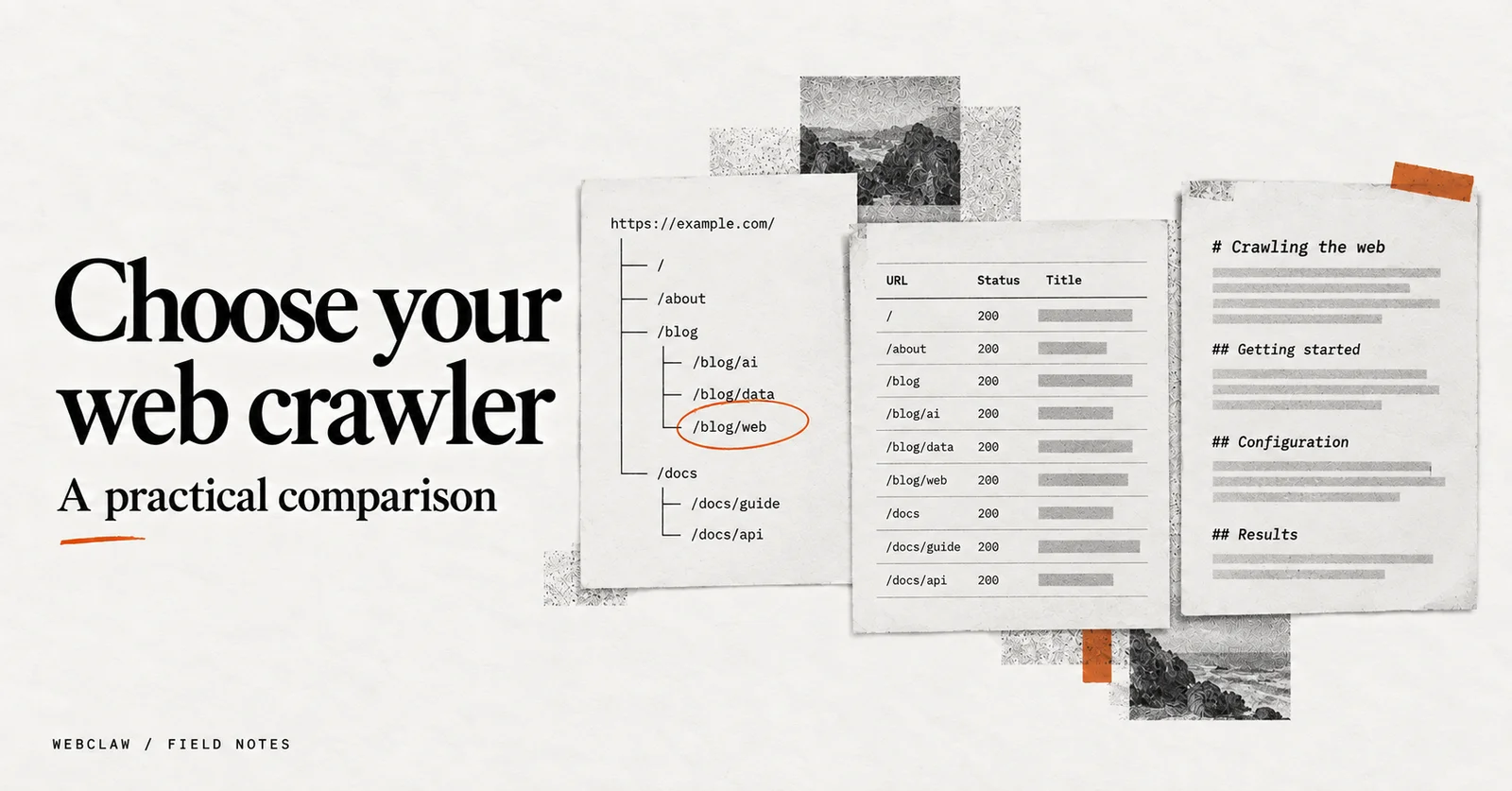
Aug 2, 2026Massi
Open Source Web Crawler Guide for 2026
Compare Scrapy, Crawlee, Crawl4AI, and Webclaw by workload. Check crawl coverage, extracted content, and maintenance before choosing a tool.
Aug 1, 2026
Get started
Stop reading. Start scraping.
Cancel anytime. Turn any page into clean, structured content your agent can actually use.