Blog
Web extraction, LLMs, and building in public.
Technical deep dives on web extraction, content parsing for LLMs, anti-bot bypass, and building open-source infrastructure in Rust. Written by the team behind webclaw.
webclaw turns any website into clean, structured content for AI applications. These posts cover the engineering decisions, trade-offs, and lessons learned building a web extraction toolkit from scratch.
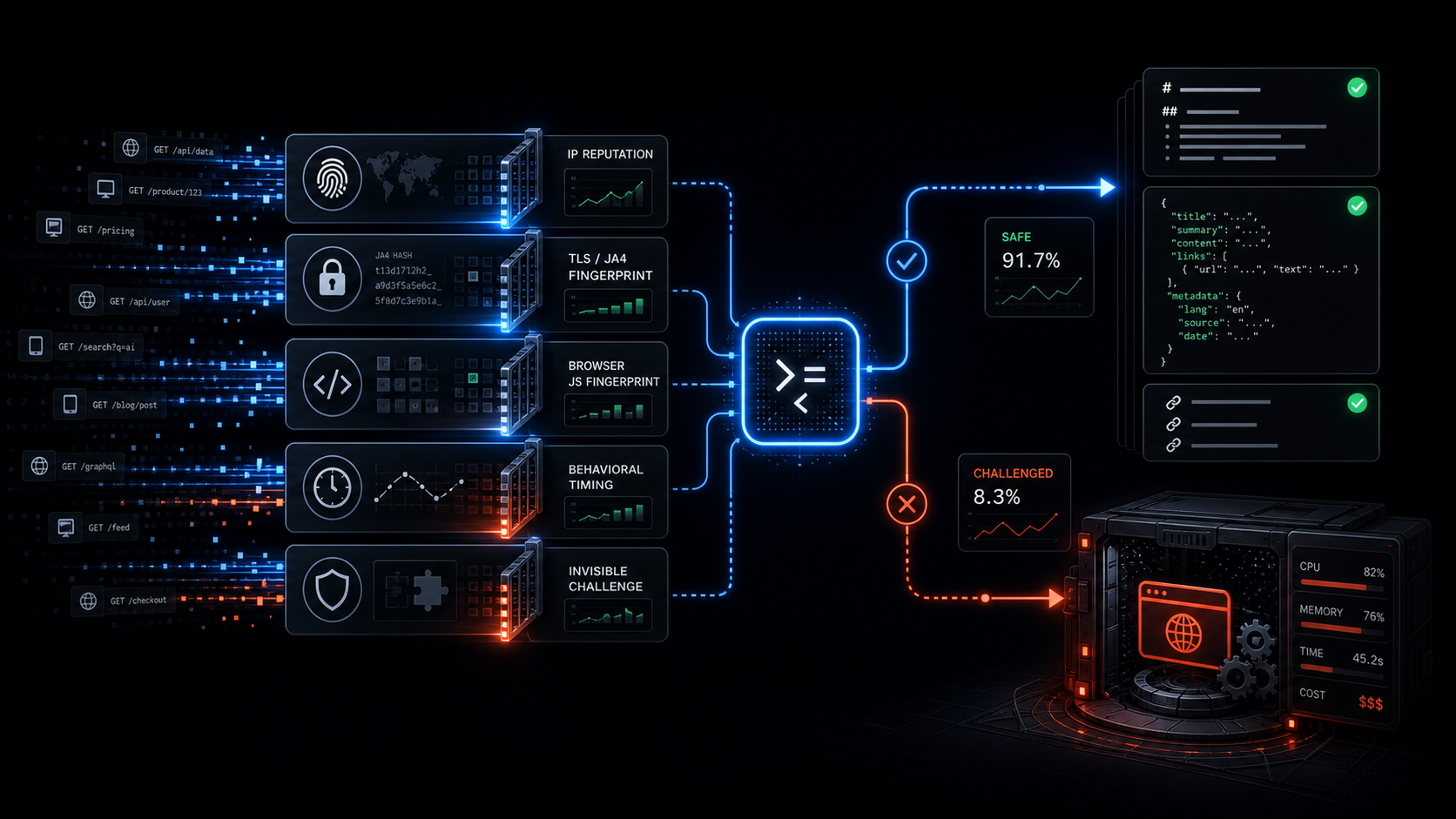
Anti-Bot Scraping API: Browser Fallback Signals
The exact block markers, JA4 fingerprints, empty shells, anti-bot cookies, JavaScript heuristics, and content-quality signals that decide when a scraping API should escalate to a browser.
Anti-Bot Scraping API: Skip the Browser, Keep the Speed
An anti-bot scraping API that detects the block first, then escalates to a browser only when needed. Faster and cheaper, with clean markdown or JSON out.
Get started
Stop reading. Start scraping.
Cancel anytime. Turn any page into clean, structured content your agent can actually use.