A Practical Guide to Duplicate Detection in 2026
You scrape a few thousand pages, run a quick text export, and everything looks fine until retrieval quality starts slipping. Search results repeat the same article across printer pages, region variants, syndicated copies, and pages that differ only by a cookie banner. Your index grows, but answer quality doesn't.
That's the point where duplicate detection stops being a cleanup chore and turns into a systems problem. In a web scraping pipeline, duplicates waste storage and compute. In an AI or RAG pipeline, they also distort retrieval, overweight repeated claims, and bury useful edge-case phrasing that you wanted to keep.
Most guides flatten this into one rule: find duplicates, delete them. That works for obvious junk. It breaks down fast when your corpus includes near-identical pages that still carry different intent, audience, or supporting detail.
Why Duplicate Detection Is Critical for Web Data
Web data is noisy by default. The same page shows up with tracking parameters, mobile templates, translated versions, mirrored domains, and content blocks injected by ad systems or consent tools. If you ingest all of it as if every document were equally unique, your downstream systems pay the price.
That price is not theoretical. Organizations lose an estimated $3.1 trillion annually due to data duplication issues, and many enterprises still struggle with duplicate rates above 5 to 8%, according to Landbase's duplicate record rate analysis. The mechanics are simple: duplicate records waste spend, create operational drag, and pollute decisions.
For scraping teams, the failure mode usually starts earlier than people think. It often begins in collection and processing design, not in model tuning. If you're already running scheduled crawls or large ingestion jobs, it helps to think about deduplication as part of the same operational discipline you'd apply to batch processing for data pipelines, not as a last-mile text cleanup script.
Why this matters more in AI systems
A search index can tolerate some repetition. A RAG system is less forgiving.
Repeated documents skew retrieval toward whichever source was copied most often. Boilerplate-heavy pages can crowd out thinner but more informative pages. A model then synthesizes from an imbalanced context window and sounds overconfident because it saw the same claim several times.
Practical rule: Duplicate detection should protect retrieval quality first, storage second.
The real task is classification, not deletion
The useful question isn't “do I have duplicates?” You do. The useful question is which kind you have and what action each kind deserves.
In practice, web pipelines contain a spectrum:
- Exact copies that should usually be collapsed immediately.
- Near-duplicates that may be boilerplate noise or may preserve useful context.
- Semantic duplicates that look different on the surface but say the same thing.
Teams that treat all three the same usually over-delete and lose nuance, or under-delete and ship bloated indexes. The better approach is selective removal of true noise while preserving variance that helps ranking, grounding, and answer generation.
Exact Near and Semantic Duplicates Explained
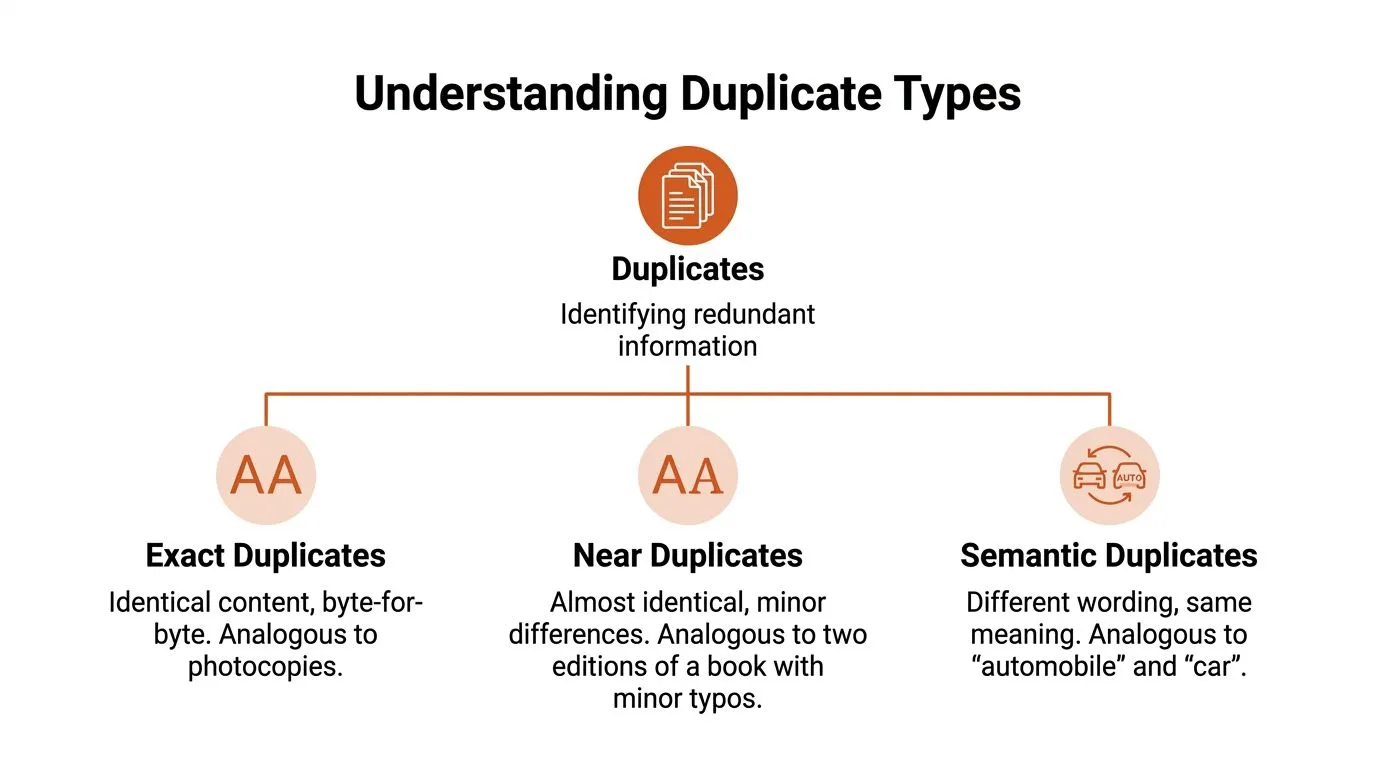
You can't pick the right method until you know what you're trying to catch. In web scraping, “duplicate” covers at least three different problems.
Exact duplicates
An exact duplicate is the easy case. Two documents are the same byte for byte, or the same after a very small normalization step such as trimming whitespace or normalizing line endings.
Think of this as the cp command. You copied one file into another path. Nothing meaningful changed.
Common scraping examples include:
- Repeated fetches of the same URL saved under different job IDs
- Content accessible through multiple canonical mistakes
- Export artifacts where the same extracted text lands in more than one dataset
These are cheap to catch and usually safe to remove.
Near-duplicates
A near-duplicate is mostly the same document with a few local changes. This is the most common duplicate class on the web.
The page body may be the same while ads, timestamps, “related posts,” navigation labels, or minor edits differ. Product pages often change stock text or shipping notes while keeping the same core content. News pages may differ only by region banners or recommendation widgets.
A good mental model is two editions of the same book with typo fixes and a new foreword. They aren't identical, but treating them as fully separate documents often adds noise.
Near-duplicates are where most naive pipelines fail. Exact hashing misses them, and aggressive fuzzy matching often removes too much.
Semantic duplicates
A semantic duplicate expresses the same underlying meaning using different wording.
One page might be a vendor announcement. Another might be a press article summarizing it. A third might be a partner page paraphrasing the same facts for its own audience. The overlap is about intent and meaning, not string similarity.
Examples include:
- A product launch post and a news recap
- A help center article and a community answer explaining the same fix
- Two summaries of the same policy change written by different publishers
These are the hardest to handle because they can still be valuable in RAG. Different wording can improve recall for more query styles, even when the substance overlaps.
Why this distinction matters
Each category needs a different response:
- Exact duplicates usually get dropped.
- Near-duplicates often get clustered, scored, and selectively retained.
- Semantic duplicates usually need retrieval-aware treatment, not blanket deletion.
If you skip this classification step, you end up solving the wrong problem well.
Core Algorithms for Finding Duplicates
The right algorithm depends on what “same” means in your pipeline. Some methods are deterministic and cheap. Others are approximate and much better suited to messy web text. The mistake I see most often is forcing one algorithm to handle every duplicate class.
If you're extracting article bodies or page text from websites, the quality of the extracted text matters before any algorithm touches it. Raw HTML tends to exaggerate differences that don't matter. Cleaned content from a purpose-built website text extractor gives every method below a better starting point.
Hashes for exact matches
For exact duplicates, plain content hashing still does the job. Compute a hash over normalized content and collapse identical outputs.
This is fast, deterministic, and easy to operate. It also fails immediately when two pages differ by a single injected line, reordered block, or timestamp. That isn't a flaw. It's just not the right tool for near-duplicate detection.
Use exact hashing when you need a first-pass filter that removes obvious repeats before more expensive work begins.
SimHash for fast near-duplicate screening
SimHash is built for large-scale near-duplicate detection. Instead of preserving exact content identity, it creates a compact fingerprint where similar documents tend to land near each other in Hamming space.
Google's web crawling infrastructure uses 64-bit SimHash fingerprints to identify near-duplicate pages, according to Google's SimHash paper. That's why SimHash keeps showing up in production systems. It's compact, fast to compare, and practical when you're handling many documents.
The trade-off is straightforward. SimHash is excellent for screening and candidate generation, but threshold selection matters. Set the threshold too tight and you miss useful matches. Set it too loose and boilerplate-heavy pages start colliding.
Shingles MinHash and edit distance
For text-heavy pages, a common pattern is to break content into shingles, then compare overlap. MinHash approximates Jaccard similarity efficiently and is often a better fit than raw edit distance for long documents.
Verified benchmark data notes that MinHash can achieve 99% accuracy for text similarity thresholds above 0.8 when using 128 hash functions, and it outperforms Levenshtein distance by 15% in detection speed for large datasets in the cited benchmark summary from DagsHub's duplicate data management article.
Edit distance still has a place. It's useful for short strings such as titles, names, or normalized paths. It's usually the wrong tool for full-page comparisons at scale because it becomes expensive and overreacts to local formatting changes.
Embeddings for semantic overlap
Embeddings help when wording changes but meaning stays close. You convert text into dense vectors, then compare vectors with cosine similarity or use nearest-neighbor search to find semantically related items.
At this juncture, duplicate detection crosses into retrieval design. In a scraping pipeline, embedding-based similarity can tell you that two documents are conceptually overlapping. It cannot tell you whether you should delete one. That decision depends on your use case.
For RAG, semantically similar pages can still deserve separate slots if they provide different framing, source authority, or audience language. For canonical document stores, you may want one representative plus citations to alternates.
If exact hashing answers “is this the same file,” embeddings answer “is this the same idea.”
Duplicate Detection Algorithm Comparison
| Algorithm | Best For | How It Works (Simplified) | Pros | Cons |
|---|---|---|---|---|
| Exact hash | Exact duplicates | Hash normalized content and compare identical digests | Fast, deterministic, cheap | Misses any small variation |
| SimHash | Near-duplicate web pages | Convert features into a compact fingerprint and compare Hamming distance | Scales well, strong for large crawls | Threshold tuning can be tricky |
| Shingling + MinHash | Text overlap across long documents | Compare token-set overlap approximately | Good for content similarity, efficient candidate matching | Sensitive to preprocessing choices |
| Edit distance | Short fields and labels | Count the edits needed to transform one string into another | Intuitive, useful on titles or names | Poor fit for long documents at scale |
| Embeddings + cosine similarity | Semantic duplicates | Compare meaning through vector proximity | Finds paraphrases and concept overlap | More compute, more judgment required |
How to Scale Duplicate Detection
The hard part isn't finding one duplicate. It's finding likely duplicates without comparing every document to every other document.
Why brute force fails
A brute-force pairwise comparison strategy looks acceptable on a toy dataset and becomes unusable quickly in production. The problem isn't the math alone. It's the operational waste. You spend most of your time comparing documents that were never plausible matches.
Web scraping pipelines already have enough moving parts: scheduling, retries, rendering, extraction, and site discovery. If you're also pulling content from a web search API for research and enrichment, candidate volume grows even faster because the same topic surfaces through many sources and variants.
Blocking and smart candidate generation
The first scaling move is blocking. Only compare documents that already share a meaningful property.
Good blocking keys depend on your corpus, but common examples include:
- Host or domain grouping when duplicates mostly live within a publisher
- Normalized title prefixes for article-like content
- Publication date windows when repeated stories cluster in time
- Language or locale so you don't compare unrelated variants too early
Blocking isn't glamorous, but it removes huge amounts of pointless work. It also forces you to think about where duplicates really come from in your pipeline instead of pretending every document is equally likely to match every other one.
Most scalable duplicate detection systems are really two systems. A cheap filter first, then a better comparison only on candidates.
LSH as the workhorse
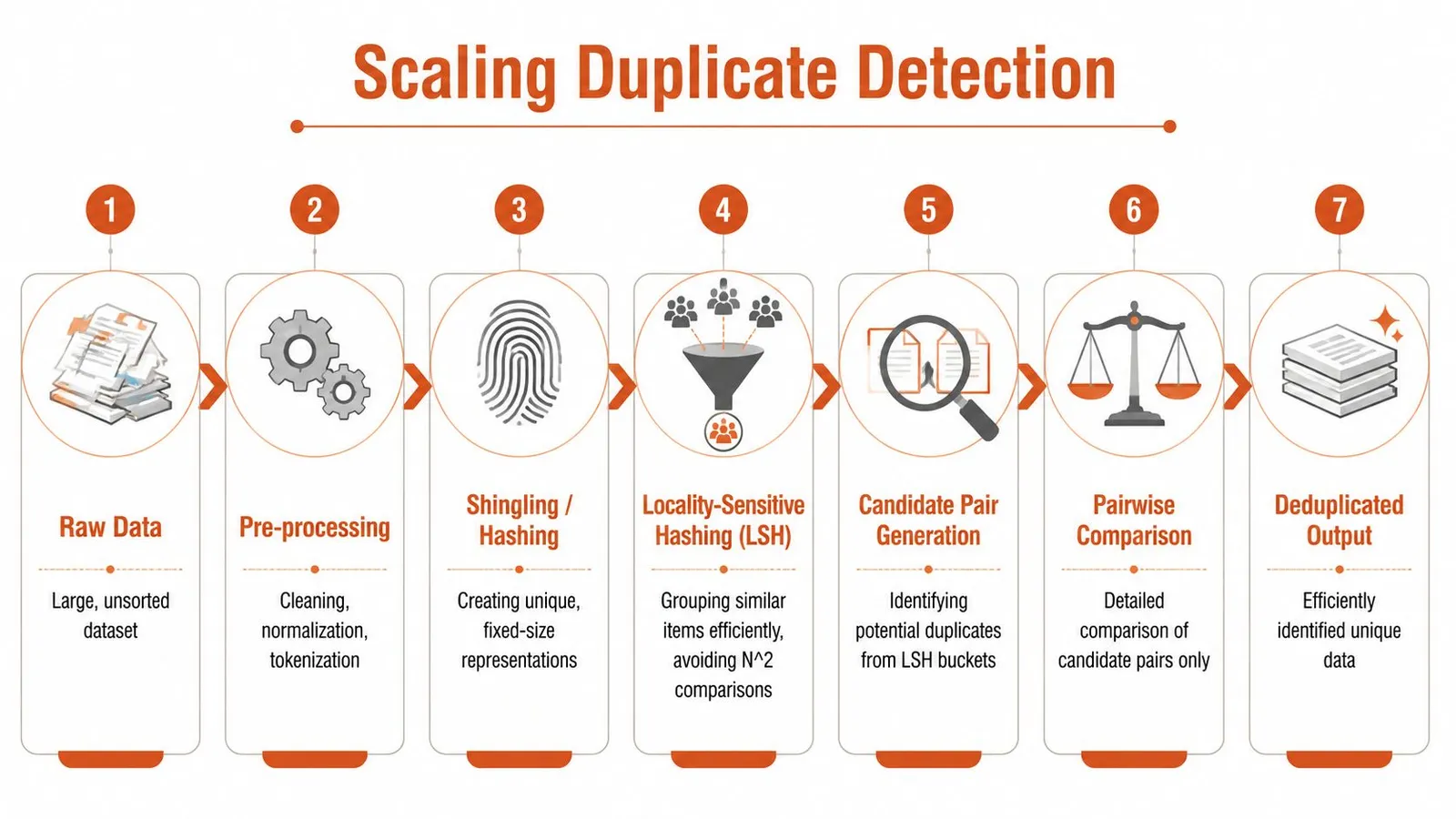
For near-duplicates, locality-sensitive hashing, or LSH, is the standard scaling trick. Instead of exhaustive comparisons, LSH places similar items into the same buckets with high probability. You then do detailed comparisons only inside those buckets.
That gives you a practical workflow:
- Preprocess text so boilerplate and formatting noise don't dominate.
- Generate signatures such as MinHash or fingerprints such as SimHash.
- Bucket similar items using LSH or related indexing methods.
- Run pairwise scoring only for candidate pairs.
- Apply keep, merge, or drop rules based on your application.
What actually works in production
The best large-scale systems aren't trying to be clever everywhere. They're selective.
A solid production pattern looks like this:
- Remove exact duplicates immediately with deterministic hashes.
- Use cheap approximate methods early for candidate generation.
- Reserve expensive semantic comparison for a smaller candidate set.
- Store cluster decisions so you don't recompute everything on every crawl.
What doesn't work is running an expensive semantic comparison across the full corpus and calling it “AI-powered deduplication.” That usually means high cost, unstable thresholds, and a lot of manual cleanup.
Evaluating Your Deduplication System
If you don't measure duplicate detection carefully, you'll either congratulate yourself for deleting useful documents or panic because some duplicates remain. Neither reaction helps.
Precision and recall in plain English
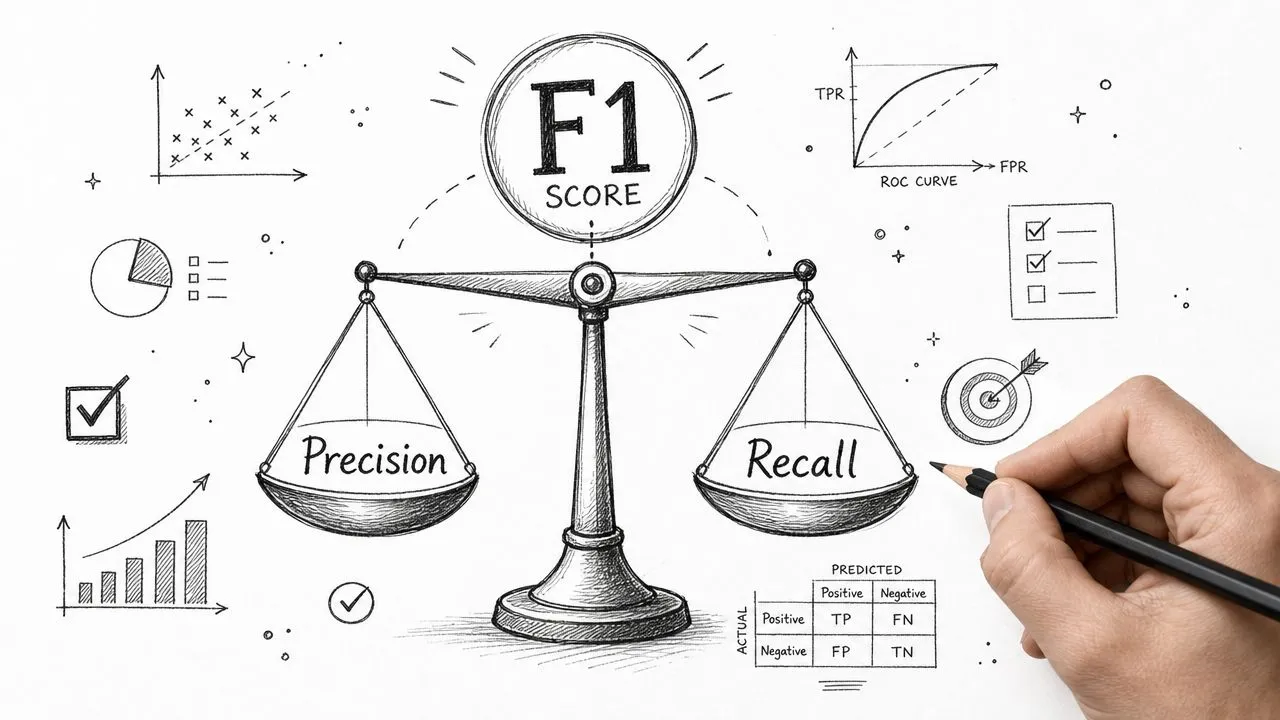
Precision asks: of the pairs you flagged as duplicates, how many were correct?
Recall asks: of all true duplicates in the dataset, how many did you manage to catch?
Those sound similar, but they pull your system in different directions. A conservative threshold usually raises precision and lowers recall. A loose threshold catches more duplicates but also sweeps in false matches.
If your corpus feeds a RAG pipeline built on web data, false positives often hurt more than false negatives. Deleting a useful document can remove a perspective your retriever needed. On the other hand, if your goal is database hygiene or storage reduction, you may accept lower precision to catch more redundancy.
Why the trade-off never goes away
This isn't a new problem. Probabilistic duplicate detection has been around since the 1960s. In the WHO Drug Safety Database work, the hit-miss model achieved 63% recall with 71% precision in discriminating duplicates from random matches, as described in the NORC paper on the hit-miss model.
That historical benchmark is useful because it reminds people that duplicate detection is a trade-off problem, not a checkbox feature.
Don't evaluate a deduplication system only by how many records it removed. Evaluate whether it removed the right ones.
A practical evaluation loop usually includes:
- A labeled sample with true duplicate and non-duplicate pairs
- Separate score thresholds for exact, near, and semantic handling
- Manual review of edge clusters where business rules matter most
- Retrieval-side checks to see whether answer quality improved or regressed
F1-score can help summarize the balance, but it shouldn't replace inspection. In scraped corpora, the ugly failures tend to sit in the edge cases.
Implementation Guide for Scraping and RAG
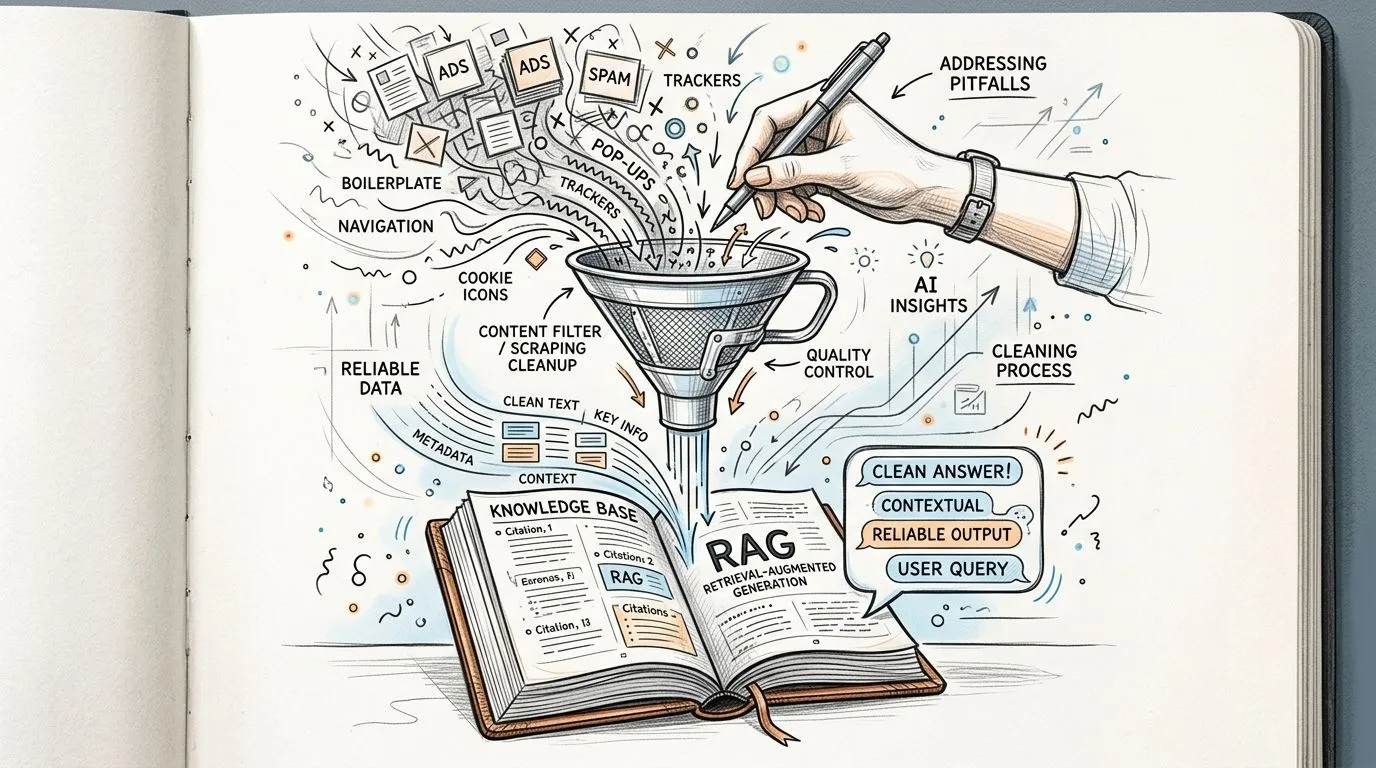
Most duplicate detection failures in scraping pipelines start before the algorithm. They start with bad input. Raw HTML is full of navigation, cookie banners, legal footers, injected recommendations, and layout text that changes often enough to fool naive similarity checks.
Start with cleaner text than raw HTML
If you compare pages at the HTML layer, you'll over-count differences that don't matter and under-count repetition that does. Article body extraction, template removal, and field normalization matter more than many teams expect.
That's also why many teams use tools that convert web pages into cleaner working formats before they deduplicate. If you want another practical reference point, Markdown Converters' web scraping capabilities show the same general principle: cleaner extracted content gives downstream processing less junk to misinterpret.
For AI training data and RAG, the tricky part isn't exact duplicate removal. It's knowing when not to deduplicate too aggressively. Verified guidance notes that near-duplicates in the 85 to 95% similarity range can preserve valuable semantic variance for model resilience, and generic tools often miss that nuance, as discussed in Octoparse's note on data deduplication trade-offs.
A practical tiered pipeline
For teams scraping websites for data, a tiered approach is usually the safest operational design.
-
Exact pass first
Hash normalized body text and drop obvious duplicates immediately. Keep the canonical URL and store aliases so you can trace where duplicates came from. -
Near-duplicate pass second
Run SimHash or MinHash on cleaned text, not raw HTML. Cluster candidates rather than deleting on first match. Within each cluster, pick a representative document based on source quality, extraction completeness, or recency. -
Semantic pass last
Use embeddings to find conceptually overlapping documents. Don't auto-delete these by default in a RAG corpus. Tag them, cluster them, and let retrieval rules or human review decide whether they stay separate.
A short walkthrough helps:
Where teams usually get this wrong
The common mistakes are operational, not theoretical.
- They deduplicate too early: Pages get compared before extraction removes template noise.
- They deduplicate on a single field: Titles or URLs alone aren't stable enough for real-world web corpora.
- They delete clusters blindly: Near-duplicates get collapsed even when one version contains the exact phrasing users search for.
- They skip auditability: Months later, nobody can explain why a document vanished from the index.
For RAG, I'd rather keep a few controlled near-duplicate variants than erase useful phrasing diversity. The right outcome isn't the smallest corpus. It's the corpus that gives retrieval enough variety without flooding it with repetition.
Key Takeaways for Effective Duplicate Detection
Good duplicate detection isn't about deleting as much as possible. It's about making better distinctions.
Start by defining what kind of duplicate matters in your pipeline. Exact duplicates, near-duplicates, and semantic duplicates aren't the same problem, so they shouldn't share the same rule. Then match the method to the job. Hashes are for exact copies. SimHash and MinHash are practical for near-duplicate screening. Embeddings help with semantic overlap, but they need policy, not just thresholds.
At scale, candidate generation matters as much as the scoring method. Blocking and LSH keep the system tractable. Evaluation matters just as much. Precision and recall tell you whether your system is deleting noise or deleting value.
For practitioners who want a concise companion reference on terminology and core concepts, it's worth taking a look at truelabel's data deduplication guide. It's a useful glossary-style resource alongside a more implementation-focused workflow.
The most important takeaway for AI pipelines is simple: preserve useful variance. If two pages are functionally the same, collapse them. If they are merely similar and support different retrieval paths, treat them as related, not disposable.
If you need cleaner inputs before any deduplication logic runs, Webclaw is built for that exact problem. It turns messy web pages into structured, token-efficient content that's easier to compare, cluster, and feed into RAG systems without all the boilerplate that usually breaks duplicate detection.